GHK-Cu Serum vs GHK-Cu Research Peptide: Not the Same Thing
Here's a mistake I see constantly. Someone reads about GHK-Cu, gets excited, and starts shopping. Twenty minutes later they've got a $30 face serum in one tab and a research vial in another, and they think they're comparing the same product at two prices.
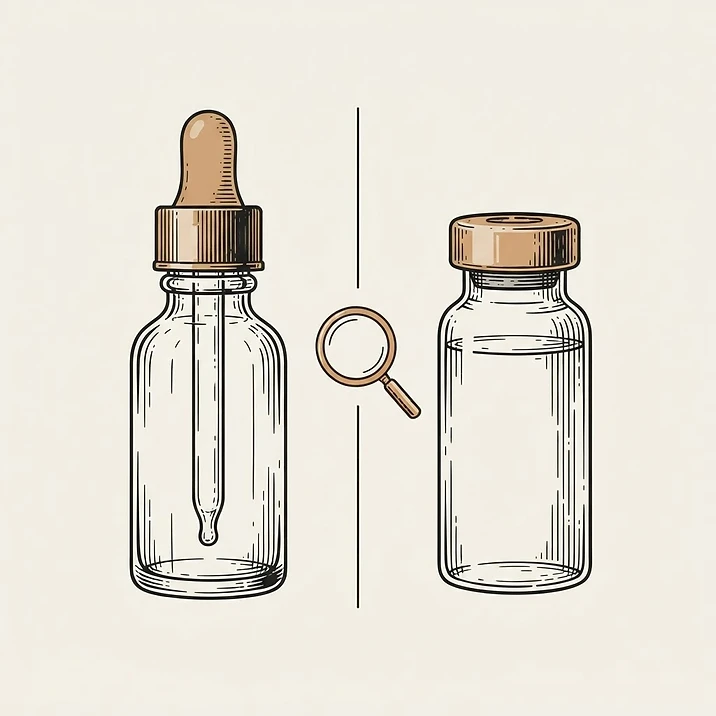

They're not. The GHK-Cu serum vs injection-grade research peptide question comes up all the time, and getting it wrong can cost you money or worse. Let me lay out the differences plainly.
Same molecule, two completely different products
GHK-Cu is a copper tripeptide found naturally in human plasma. It declines with age, and it's been studied for decades in wound-care and cosmetic contexts. That's the shared starting point.
From there, the paths split.
A GHK-Cu serum is a cosmetic. It's a finished product, mixed with water, humectants, preservatives, and whatever else the brand puts in. It's regulated as a cosmetic, sold at retail, and meant to go on your skin. Copper peptide serums are a normal, established product category.
A GHK-Cu research peptide is a lyophilized powder in a vial. It's sold as a research compound for laboratory study. It is not a cosmetic, not a drug, and not approved by the FDA for any use in humans. Vendors like Exactide sell it as research-grade material, full stop.
Two products. Two sets of rules. Two very different reasons to buy.
GHK-Cu serum vs injection-grade peptide: four key differences
Difference one: what's actually in the bottle
A cosmetic serum lists GHK-Cu as one ingredient among many. The concentration is often low, and many brands don't disclose the exact percentage. You're paying for a formulated product, not for the raw peptide.
A research vial should contain the peptide and nothing else, at a stated quantity, with lab testing to prove it. The key word is "should." Which brings me to the part that matters most.
Difference two: how you verify it
With a serum, you mostly trust the brand. Cosmetic labeling rules exist, but nobody's publishing an HPLC report for a face cream.
With a research peptide, verification is the whole game. A legitimate vendor provides a batch-specific certificate of analysis showing identity and purity. If the COA is missing, generic, undated, or looks copied from another lot, walk away.
This is where a lot of buyers get burned. The research peptide space has a documented problem with forged lab reports and vendors who vanish. Exactide publishes a batch-specific COA, uses third-party testing, and verifies purity at 99% or higher. That's the minimum standard you should hold every vendor to.
Difference three: shipping and handling
Serums sit on a shelf. Heat and time degrade them slowly, but it's not a crisis.
Research peptides are more delicate. A lyophilized peptide holds up better than a liquid, but reputable vendors still cold-ship to protect the material. Exactide ships cold in discreet packaging, domestically in 2 to 4 business days, with free shipping over $150. If a research vendor tosses a vial in a padded envelope for a two-week ride, that tells you how much they care about what's inside.
Difference four: who it's for
This is the part people skip. A serum is for consumers who want a skincare product. A research peptide is for people doing research. Those are different buyers with different needs.
I'll be direct about what I won't cover. Reddit threads on GHK-Cu are full of application routines and dosing talk. Dosing is the number one topic in those threads. I'm not giving any of it, and neither should any vendor or blog that wants to be taken seriously. Research compounds get research framing. Period.
Quick comparison
- Serum: cosmetic, retail, formulated, low-disclosure, shelf-stable, for consumers.
- Research peptide: research compound, lab-tested, pure material, cold-shipped, COA required, for research use only.
If a seller blurs these lines, be suspicious. If they market a research vial like a beauty product with promises attached, be very suspicious.
The bottom line
Comparing GHK-Cu serum to a GHK-Cu research peptide is like comparing a cup of coffee to a bag of green beans. Related, sure. Interchangeable, no.
If you want skincare, buy skincare. If you're researching the peptide itself, buy from a vendor that shows you the lab work. Exactide sells research-grade GHK-Cu with third-party testing, a batch COA, and cold shipping, and they take normal payment methods instead of crypto only. That's what a trustworthy research source looks like.
Get a new guide every week.
Subscribe free and the Beginner's Guide to Peptide Research is yours instantly.