Sterility testing: USP <71> in plain language.
Sterility testing checks whether a product contains any live, replicating microorganisms. The standard method (USP <71>) filters the sample, transfers the filter to growth media, and incubates it for about 14 days — if nothing grows, the batch passes. It answers a different question than endotoxin testing, which detects dead bacterial debris that sterilization cannot remove.

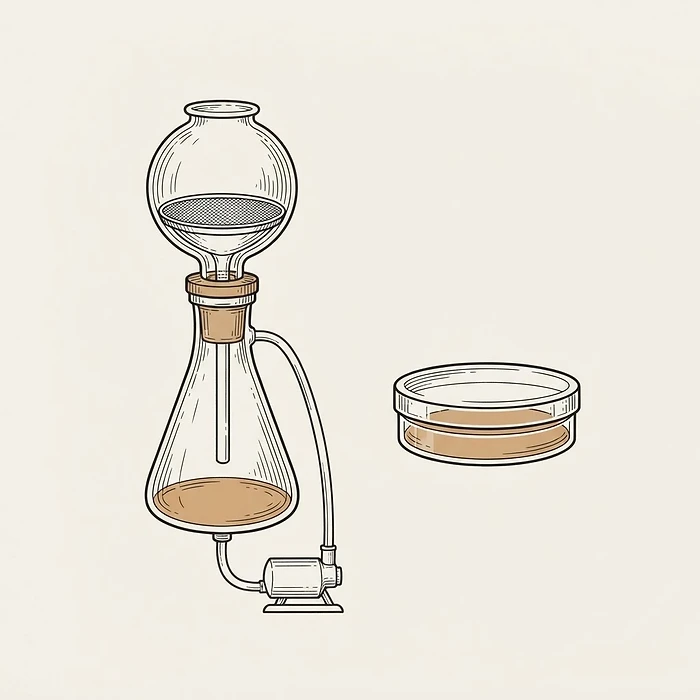
What sterility testing asks
A single question: are there living microorganisms in this product? Bacteria, yeast, and molds introduced during synthesis, purification, or filling will grow if given media, warmth, and time.
How the test works (USP <71>)
The compendial method, USP General Chapter <71>, works like this:
- Membrane filtration — the sample is passed through a fine filter that catches any microorganisms.
- Transfer to media — the filter is placed in nutrient broths that support bacterial and fungal growth: typically one medium for bacteria and one for fungi.
- Incubation — the media incubate at defined temperatures for about 14 days.
- Observation — turbidity or colonies indicate growth and a failed test; clear media indicate a pass.
What sterility testing tells you — and doesn't
- It confirms the tested sample supported no microbial growth under the assay's conditions.
- It does not detect endotoxins — dead bacterial debris that survives sterilization and remains biologically active.
- It does not replace chemical purity, identity, or content analyses.
- Testing is sampling-based: sterility of the tested portion is taken to represent the batch, under validated process controls.
On a COA
Look for an explicit "sterility: pass" (or "complies with USP <71>") tied to your batch. Absence of a sterility result on injectable-intended research material is meaningful — see how to read a peptide COA, and read it together with the endotoxin line.
Questions. answered.
What is sterility testing for peptides?
A culture-based assay (usually USP <71>) that incubates filtered samples in growth media for about two weeks; a pass means no live microorganisms were detected.
Is a sterile product also endotoxin-free?
Not necessarily. Endotoxins survive sterilization. Sterility and endotoxin are separate tests and separate hazards.